Showing posts with label street. Show all posts

Thursday, 9 March 2017

The Reality Tour of Nanjing


Moving to a new city brings with it many new opportunities for tours. As well as tours of local museums and historical sites, the usual suspect tours, there are often more informal tours that also accompany any move. This tour is one of those: I moved to the Nanjing last week and was offered a tour of the neighbourhood by a friend and colleague.


As we walked the streets and talked about the city and university that we both work at, the  subject we, or I should really say, seemed to keep drifting back to was accommodation. When I arrived fresh off the train I was first taken to this building with the glass door where the foreign staff are housed. My passport was scanned and I was handed a key by a surly receptionist before I was whisked away to a gloomy concrete block in a different corner of the campus. It seems I got the bum deal and ended up in the overspill apartment block which does not have central heating. When we passed beside this block, which is so suffocatingly hot you have to leave the windows open in mid-winter, I was left to rue my misfortune at being assigned to my fridge of an apartment in a city where winter temperatures can drop to -10ÂșC.


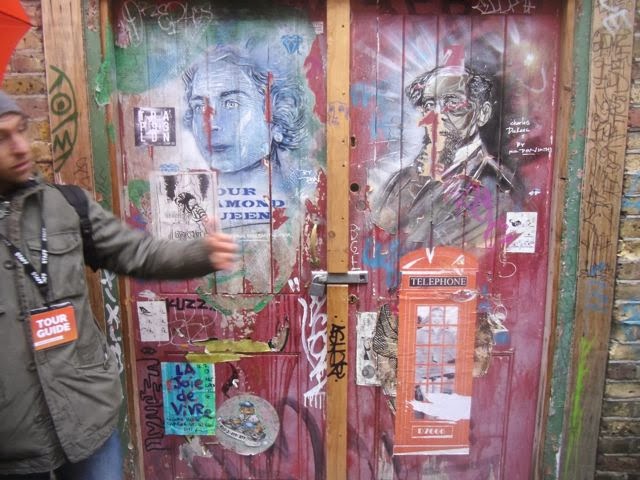
He has a wonderfully sculptural hand which he frequently used to point things out: the subway station over here, the main shopping area down that way. The fact that the hand and finger weren't perfectly aligned made them all the more addictive.  


As we made our way around one of the scruffier parts of the city centre, we talked about the job, the students and our colleagues. None of them were actually there in front of us so this conversation produced a sort of collage of urban bustle and Chinese higher education. Trying to simultaneously focus on the two lead to elisions and omissions but I daresay that some of the connections were not wholly random. While it was clear I was not meant to read one through the other, it strikes me that it can be hugely pleasurable to do just that. This, in fact, might just be the basis of an interesting audio tour experiment: take a forty minute talk on a specialist topic and inscribe it onto a landscape with definite 'turn left, stop at the lights,' directions spoken within the body of the talk. For example, a few pages from the popular economic book Why Nations Fail grafted onto Leeds City Centre might make for an interesting experience. 


His city tour didn't include or even mention the nearby local market but instead brought us to the nearest supermarket which was decked out with card lanterns. Neither did we go through nor talk about the alternative entrance to the campus on the west wall. When I stopped to think about this I realised I have a thing for knowing my entrances and exits and would include them in even a rudimentary tour. The simple fact was he used a different set of coordinates to mine and moved between them using a different system of navigation too.  


Where our mental maps seemed to converge was at the parcel delivery office. I rather liked that this tour was not only based upon the showing of places and things as a detached observer, it also included the guide engaging in some of his daily life actions. Here, the showing took place, at least in part, through the doing. This style of tour is not unusual for  workplace initiation tours or if you have family visiting and you are not busy but it is interesting to imagine how it could function otherwise. Taken to its logical conclusion it would mean a person shows you their unadulterated daily life: you accompany them for a period of time and they explain what they are doing while doing it. I believe that there have been attempts by artists in Berlin to do just this, to effectively market themselves as a lifestyle, but how successful this has been I cannot say. I would imagine the observer's presence must inevitably alters the guide's daily activity because people want to show the best of themselves. This reality tour principle does, however, have the potential to be something rather unusual, if taken to its logical extent.  


The tour came to a close in a very special way. After we stepped outside the university shop, he cleared his throat, spat on the pavement and muttered, "I'm becoming a bit Chinese." I have heard of a number of Westerners, well Western men, adopting this habit after spending time here. Where he still showed his foreignness was in how he forcefully spat it out whereas the far more common way I see the pros here do it is that they first hawk up a glob of phlegm, manoeuvre it to the front of the mouth then simply open wide and let it dribble out. In any case, this was a fittingly unaffected way to end for this reality tour of Nanjing: pavement punctuation, a full stop written on the concrete.   

Thursday, 25 June 2015

The Free Alternative Tour of Berlin


To the East of the city, by the banks of River Spree, runs a daily 'Alternative Tour' of the city. A reasonably sized group of us gathered at noon for a three-hour walk through the sites of Berlin's counter-culture. This tour is another so-called free tour, which is to say, it is one that is done for tips. Unlike the Amsterdam 'free' tour I recently took, this one was not pushy and did not try to pump us to give money, it was much more low-key. Our guide, a young Australian woman, introduced herself to us and it turned out she was relatively new to Berlin having lived in the city just one year. Her main qualifications for the job were her command of the language, an outgoing personality and her enthusiasm for street art.  


After having a chat with another one of the company's guides, who runs their ever popular pub crawl in the evenings, we stopped to admire our first piece of street art. We learnt a bit about the artist, an Italian woman, how the work was made and what it might mean. We then took photos and filed off to the next artwork.


We were given an interpretation of this work that both started and stopped at the blatantly obvious: it is a political piece of street art about the euro crisis. I'm not so used to this blunt form of art criticism and if I try to imagine it in a museum tour it can be almost funny. Here, however, it more or less worked as it was in keeping with the directness of the art itself. Indeed, I had the feeling that the majority of the street art we came across was raw expression, though there were some refined works too, and this got me wondering, what is the attraction in looking at miserable art? When I thought about it further I came to see that these sorts of pictures are to art what teenage grunge bands are to music. They rarely have the skill or subtlety of expression of gallery artists and they are working to a much more immediate, easy to grasp, aesthetic. They are still expressive, some maybe even more so than the professional art, and some people (mostly younger) will feel more connected to this sort of art than to what they'd find in museums. There are exceptions too; crossover street artists who branch into advertising, gallery shows and coffee table books, which we'll come to later. 


She talked a lot about the different techniques employed by street artists, such as, attaching wheat paste posters to the wall. I found it surprising she did not acknowledge the man standing to the side of her sticking an advertisement, piece by A3 piece, onto the wall. The technique is very similar and I was struck that the advert was not printed on a large sheet of paper but was rather home-made and assembled from many smaller pieces. She said that street art being used for advertising was frowned upon yet I also see that it's rife. The NSDM wharf in Amsterdam, where I will open another tour in a little over a week, is full of street art advertisements for trainers. It is also, not co-incidentally, where MTV have their offices and studio.


The pivotal moment of the tour for me came when we were walking in Kreuzberg. We came upon a large and very direct piece of street art: a hand giving the finger with the words 'FUCK YOU' above it, just in case you didn't get the message. On the side is another piece of text reading "TRAVELLERS WELCOME FUCK GHETTO TOURISTS". I guess that would mean us. She said it was a new piece that was 'brutal' and she couldn't find a neat way to incorporate the message back into the tour, as it was a direct challenge to our tour's legitimacy. 


We instead talked about a large squat that once occupied the land in front of the wall that was so spectacularly showing us the finger. The place had been cleared by the city authorities fairly recently amid speculation that a fire which precipitated its clearance, on public health grounds, was not accidental. My impression was that the whole area was cleaning up and while it still had the self-identity of being grungy and alternative, the reality was something else. The cafes we passed were actually not so cheap and the punks were outnumbered by the hipsters and Turks going about their business. The conditions that had created Berlin's counter culture were no longer in place and, block by block, the city seems to be returning to the mainstream German fold.


While we were talking about a street artist who was fined a hefty sum by the city authorities, decorators on the other side of the road were painting the front of a building an elegant shade of cream. It must be an unrewarding job painting a building like that in the full knowledge that within 48 hours it would be tagged but, on the other hand, that does also mean that as a painter you have a steady stream of work. Indeed, even the street artists have this problem of their pictures getting plastered in tags and we learnt that some return to touch up their art.


We came to the work of some successful street artists, a pair of twins who make large-scale paintings such as this one on the side of the building. There must be a system for the promotion of artists like these and it might be interesting to learn how the street and money collide and interact with one another. The Banksy film Exit Through The Gift Shop covers some of this terrain quite entertainingly but does so from a self-serving position. A cooler more analytic documentary would make for myth-busting viewing.


The last stop on the tour was a park with some street art. Some alcoholics were drinking beside the art we were looking for so we did not interrupt their reverie and instead concluded next to this statue. There was nothing said about the statue, however, it was to all effects invisible. I found this a pity as it too is art that is found on the street. By focussing so exclusively on contemporary street art a great deal of art that is also found alongside it was missed and I would have found the comparisons very interesting. Perhaps that is just me reimagining the tour with a broader visual field that would bring into focus some interesting questions around who makes art, for whom, and how. Those sorts of questions which open up a discussion of society, politics and aesthetics were outside the scope of this tour, however, which stuck to simply showing some examples of one type of art. Finally, it is a tourist walking tour after all.

Sunday, 14 September 2014

The Tour of Britain: the lycra warriors come to town

I'm not going to write too much about this one as I am in the final stages of making a Tour of Tours here in Bath and need to spend time on that. Yesterday, however, I did watch the start of stage 6 of the Tour of Britain, and it deserves some mention.


First thing to notice was the health and safety treatment the city centre received. This was one of my favourite installations.


A considerable amount of resources went into hosting this cycle race which runs overs eight stages, spread over England and Wales. Hardly a tour of Britain in the manner of say Dafoe's, but then again, Scotland has the wee matter of a referendum to deal with so this race might have seemed irrelevant even unwelcome north of the border. Still, these sorts of events are a way in which the state is made visible so it is telling that Scotland was omitted. This is where the cones lived. 


The city centre was to be blocked off for an hour or so for the start of the race. As I approached the starting point I encountered more and more race paraphernalia.


And here they were: the racing bikes just sitting on the pavement. This was not formula one grand prix: the whole outfit simply rolled into town the night before and set up on the street this morning. There was no clear separation between frontstage and backstage of the operation: the backstage, as it existed, was the interiors of the various support vehicles that accompanied the cyclists.


There was some celebrity buzz about the race, with the autograph hunters out and a last minute scrummage around the starting line. Not knowing one cycling celebrity from another this seemed entirely arbitrary to me. At this point I started to really notice just how many cars there were within the tour's supporting infrastructure.


This Team GB pram with dogs was one of the more daft things I saw. I couldn't help but wonder if this might be the last time that this banner gets used. If Scotland votes for independence next Thursday this banner, made for The Olympics, will become obsolete. Come to think of it, it's already gone to the dogs.


Keeping some semblance of order around the start were professional events management staff who travel with the race. One prerequisite of the job is having a loud voice so you can clear people from the road when the cars and occasional bikes come through.


The vehicles just kept on getting bigger and bigger. The racing teams had coaches like this one which were their mobile headquarters. 


On the street the crowds gathered to watch the cyclists pass and free advertising was handed out in the shape of these inflatable batons. I noticed these are sponsored by KLM. I  had a truly horrible experiences with them that, still to this day, they have not resolved. I wish they would spend just a little bit more on a honest customer service department and not funnel it all into advertising. They are scoundrels and should be avoided. 


I took my position on the route and soon after, the cavalcade approached, headed up by police motor bikes and followed by a police car. Going back to Dafoe, it is interesting to read that when he visited Bath it was a building site with The Circus, in the background, just one third completed and still featuring a pond in the middle. With each update of his tour (pages 293-297) he had to revise this and many other descriptions of Bath, as the city was changing rapidly at that time.


Following the police came the race controller in a shiny car and some cameramen. The technology to broadcast and edit this stuff live must be quite complicated. Behind them the cyclists themselves finally came into view.


It was striking that they were not really racing at this stage. They were tightly packed and were instead making a circuit of the city centre for the benefit of the camera. In this sense, this race functions as a tourist advert: it shows a route through the city that includes all the must see locations. 


That's not to say they were going slowly, they had some pace but nothing exciting. This seemed like a warm up and when they got onto the hills out of the city, the race proper would begin.


As a keen cyclist myself I looked at these bikes and cyclists and felt strangely indifferent. The whole thing seemed completely removed from my world. I use the bike as a practical means of getting about and as a source of pleasure and exercise. This was something else.


Just as there were a number of vehicles preceding the bikes, so too were there many more following them. First was the cameraman on a motorbike. 


This was followed by more cars and the cars also got a cheer from the crowds, who lined the streets. Seeing as the bikes were all gone in 30 seconds they needed something else to make some noise about.


Up above a helicopter hovered over the city. No doubt this had a camera inside and was gobbling up some of the architectural porn which was a good half of the point of having the race come to Bath. The ending point of this stage, Hemel Hempstead, is altogether more puzzling to me. There must be some race logic behind this to do with distances, gradients, location of the following stage, logistics, projected size of crowd and degree of support from local authorities. Still, Hemel Hempstead hardly inspires as a destination. It's not like a cycle race to Edinburgh or, more ambitiously, the Paris Dakar road race, which sets the imagination off. I've been to Hemel Hempstead several times, my brother used to live there and there's nothing terrible about it, it's simply a nondescript satellite town with a weirdly large roundabout. I could imagine a couple of teenagers in Watford racing each other to Hemel Hempstead on their scooters, but that's about the sum of it as a race destination.


With the stream of vehicles that then followed, much much longer than the pack of bikes, I had to stop and consider how this sort of racing is really highly dependent on the motor vehicle. If I were to imagine a more militantly cycle-centred race, I would design it around a completely different logic so that it would consist of bikes and just two cars: one at the front and one at the back. These cars would time the cyclists and they'd be there if there were road accidents. They could each contain a journalist but that would be it. Everyone else would be on the bikes or at the side of the road. Of course such a race would be near invisible in comparison to this media circus and maybe that's the thing that troubles me slightly about it all. It feels like the cyclists are the decoration and the vehicles are where the real substance of this outfit is to be found. 


With the bikes and cars out of the picture, the thing to do was to then watch the rest of the race on the large plasma screen erected in the park. Some people came in their cycling costumes, their road bikes parked nearby. Theirs is a different way of cycling to mine, I now see, but I wish them all the best with it. Personally, I like to go off-road exploring canal paths and bridleways, I don't like to be a mobile advert with anyone's logos and besides, with my gangly arms and legs I look daft in lycra. There's many forms of cycling tour and I'll have to cover a few more of them when the opportunity arrises.

Monday, 27 January 2014

The Secret History of Street Food Tour

In the name of diversity (and a healthy dose of self interest) I was able to take another first for the blog here: a food tour.


My guide Emma from Coutours met me beside the West Cornwall Pasty Company Stand, outside of Liverpool Street Station. It was an easy to find, food related meeting point for this private tour which would take me around the East End and introduce me to some of the foods and stories behind the varied culinary cultures of this part of London. 


We soon came to Spitalfields Market and the adjacent Fruit and Wool Exchange. This building is one I must have seen many hundred times yet I don't recall ever noticing its title up on high. I was told about its former purpose and how it had been turned into offices more recently. We talked about the market and its former dysfunctional days with some affection; produce and people spilling chaotically out onto the streets blocking the roads. The tour's focus was upon history, on what had been there, so we went further back in time and I heard about its Victorian period and the class distinctions which meant the middle and upper classes did not shop for food but rather sent their staff. This focus upon history is of course a very typical one of guided tours which often aim to bring to the surface the invisible or hidden aspects of an area which the visitor might not know or be able to see by themselves. A tour that focuses not on the past but on the present is less common but there are a few locally such as the, the Shoreditch Party Pub Crawl and the Street Art tours. Tours that imagine the future are the least common. These are tours that might be made by a property developer in order to win support from financiers and planning officials. It is these future focussed tours, private tours with glossy CGI brochures, that preceded the transformation of Spitalfields Market, an act of corporate vandalism that has been honoured with awards. My guided Emma expressed mixed feelings about the new Old Spitalfields Market, while something had to be done to arrest the place's freefall during the 80s and 90s, and that something would almost inevitably mean City expansion, it was not as bad as it could have been and enough of the fabric of the market remained for it to still be recognisable as one continuous structure. 


The idea of a food tour immediately set off my salivatory imagination, however the tour took us not only to places where food is served but also to some locations where there was no food to be sampled, such as this site of a former dairy. It was then that the precise nature of the tour became clear to me. While there was food to be had on this tour, as you shall see, the emphasis was far more upon using the history of food as a vehicle to talk about the area's history more generally. Given that food is a very specific expression of a culture and that this area has had many waves of immigration there was plenty to talk about. What's more by approaching this history through the frame of food, there were may original angles on stories that I had heard in other formats on previous tours of this part of London.


An example of local food history is fish and chips, one of the few British signature dishes. Emma explained how the tradition of deep frying fish in batter was introduced into Britain by Portuguese jews. When cooked in this way, the fish preserved well and made it suitable for cooking in advance and then being eaten on the sabbath. The chips, I was told, were popular with Irish immigrants and these were originally the off-cuts of potatoes which were very inexpensive. Inflation being what it is, chips from Poppies could no longer be described as cheap, but they sure were tasty, on a par with Happy Days, which I visited while taking the Queen Mary East End Tour.


This sign 'Your Mum Ate My Meat Porn' was never going to speak to me as I don't eat meat. We passed, in fact, by a great many unexceptional sights such as this and the character of the tour was that we rarely stopped at them but rather they were referred to in passing and the conversation continued as we strolled further through the neighbourhood. This leant the tour a more free flowing atmosphere, it was certainly not a tour of 12 impressive sites that came with tightly rehearsed description of them from the guide, as can happen. Instead observations and details came at a steady pace and every now and again we'd stop so there was time to talk a bit more about what was in front of us, though often as not the conversation continued afterwards as well. This is partly the result of this being a private tour for one but I noticed that Coutours deliberately keeps the tour groups small in number so something of this flavour of personalised and conversational walking is retained. I felt I was being treated like an adult; big tour groups can often have the resonance of being on a school trip.


We then entered the food markets and took a look around at the many stalls from all over the world. To my surprise there were quite a number of Ethiopian vegetarian stalls, they seem to be the latest thing. I settled in front of this Japanese stall and was set off wondering about the etymology of tempura, whether it was also of Portuguese origin or if it was developed quite independently. Answers welcome.


I found myself starting to look at the place as a United Nations of food as the stalls all had their little flags and logos clearly showing where the dishes came from. However, with this international history of fish and chips in mind, I should not have been surprised to to see that the people working at the stalls did not necessarily reflect the flags they were flying. This Japanese stall was run by an Indian man, for instance.


Then we came to our old friends the Dutch who, I was told, introduced some technical innovations in British gardening such as the use of fertilisers, which had a revolutionising effect on the produce and thus dinner table. Nowadays, of course the country is more famous for its tomatoes without flavour and the stem cell burger launched here in London last year, an artificial burger made from growing stem cells in a laboratory.


We stopped in Nude Espresso to warm up, drink coffee and see a local eatery from the inside. Since this was a solo tour I was able to ask questions not only about today's theme of food but also about my preoccupation of tours. Emma was most forthcoming and told me how she became interested in giving tours after having taken one herself in Jordan that came perilously close to falling apart in the desert. I thought this was a rather beautiful and personal beginning which she built upon through a great deal of hard work: giving as many as 2000 tours in a year. That must surely be a truly immersive sink or swim training on the job. Her perseverance has paid off and she has developed a business out of it and created a number of tours angled around different themes and set in various parts of London. She told me she continually develops new tours and is working on a 'scent' tour of Central London right now. We talked a bit more around the process of constructing tours and with our coffee cups drained stepped back out into the fresh air.


Almost inevitably we made our way to the two bagel bakeries, spelled beigel as they are of Polish origin, at the top of Brick Lane. They had sizeable queues snaking out of them since, it being a market day, they were doing storming business. That said, they seem to have a healthy flow of customers at all times of the day and night. Thinking back to what I was told earlier in the tour about shopping historically being for the lower classes I could not help but notice how it has grown in popularity and become a  major form of entertainment for people of all positions within society. While Brick Lane is not Portobello Road, it is a popular street market that is as much about selling the idea of itself as a market as it is about selling any particular goods. People come here to hang out and will not necessarily leave with purchases. The one thing they do buy however is food, as that has become part of the identity of the market, and an integral part of the market experience. This transformation from being a market of good to a market of lifestyle must be one of the main reasons behind the huge growth of street food on Sundays.


Because it was a Sunday many of the cafes and restaurants outside of the Brick Lane were closed and I was told that the East End food tour is more commonly held on a Saturday, when places like Kelly's is open. Having already tried jellied eels and mash (with liquor) before I did not feel I missed out on too much this time round, if anything it was something of a relief not to have to repeat that particular East End delicacy. This got us going on, if and how pie and mash shops could or should be rejigged, as they are something of a dying breed.


Our final stop on the tour was Pellicci's in Bethnal Green, famous for having once been the Krays' local cafe. Once again then, the twins who lived round the corner on Vallance Road made their way into a tour of the East End. I heard about a Kray tour from the point of view of someone who used to drink in an East End pub that would be periodically invaded by a tour group who'd be told, "The Krays shot a guy in that corner" and with that the group would shuffle out. Fortunately for Pellicci's the place was not the scene of a murder or stabbing, as far as I am aware, but rather the scene of many a lunch that was a result of Italian cooking meeting British tastes. 

Thursday, 2 January 2014

The Undiscovered East End Tour

I managed to squeeze in one last tour for 2013 and once again it was a tour of London's East End. I should admit I was even tempted to turn New Year's Eve into a tour using one of the self-guided architecture tours as a starting point but the weather had other ideas.


And indeed it also had other plans for this tour; it was, quite simply not a guided tour sort of day. Unphased, Luke our guide waited at the statue opposite McDonalds sporting an orange umbrella, exactly as I was told to recognise him. Since Easyjet don't bother with East London (an oversight I feel) there was no confusion of corporate colours. Having found him I ducked back under cover, the station's ultrasonic 'Mosquitos' were preferable to the rain. 


We were a small but hardy group made up of South Londoners, friends from Cologne who had reassembled for a London visit, two Australians and I. The tour was from a company called Undiscovered London and yes, while the name is a bit of an oxymoron for a company giving guided tours, the East End is off the main tourist piste so it can be thought of more as meaning undiscovered by you. This is a daily tour that starts at 11AM so it is probably fair to say that it is one that is geared principally at visitors to the capital.


This tour was in a certain respect refreshingly traditional in that it did not try to tell a single story or focus upon one theme exclusively, but rather, made its way through the East End stopping at one point of interest after another. In this sense it was in the best way generalist: one moment the evacuation of jewish children, the next 16th Century hospitals then a bit of street art. In the crowded market place of London tours there is a tendency for tours to carve out a niche for themselves by having a unique angle to mark them out and while this can result in excellent tours there remains a need to simply show people around an area and talk about the various things that can be interesting to different sorts of visitor. When done well this sort of generalist tour becomes a collage of places and stories that can give a taste of how complicated and open-ended the place itself is. Here for instance we were told about the medieval psychiatric hospital that stood on what became Liverpool Street Station. What's more, we heard how Bedlam, as it became known, offered visitors self-guided tours of the wards where visitors could witness inmates in distress and so on. The health service has been looking for additional profit making activities for a while then. 


For the first time I was taken to the Charnel House on a tour. The story here was of the hospital fields (Spitalfields) and how the dead were temporarily buried then exhumed and the bones placed here to save space. This is probably the more interesting story from the visitor's perspective yet from the point of view of someone who knows East London the more present narrative is that of The City's aggressive expansion eastwards in the form of Norman Foster's 1 Bishops Square. Incredibly, this won London Planning Award's best new public space. It is important to take stock of just how conflicted various interest groups (stakeholders in today's corporate parlance) can be: local residents, city investors, tourists, hospital authorities, the dead. 


We passed the public toilets in Spitalfields Market which were recommended for being both clean, publicly accessible and free to use, a rare thing today following the wholesale closure of public toilets by local authorities. There is an unusual London tour that caught my eye which comprises of a tour of toilets led by Lootours. Unfortunately they don't stray this far East, they focus on the West End's commodes so I won't have occasion to be reviewing that tour anytime soon.


Where a fortnight ago there stood Santas quaffing mulled wine following their city running tour we now sat and listened to a summary of the Jack the Ripper story. I suspect we stopped here not because it was on the ripper route but because it offered us a moment of reprieve from the elements. With the essentials of the murdering spree covered we were told that we had saved ourselves the three hours of going on a ripper tour. This was a nice little gag that got me thinking about how much time going on a tour of tours would save you. "Take this tour and save yourself two and a half days" might make a good tag line. This reference to the ripper tours also made me realise that I was getting a bit of a tour of tours having already heard about the Bedlam tour and now getting a potted ripper tour. I now see that many tours are developed from recycling existing tours, adding some new details or combining some previously separate information and putting a new spin on them. Completely original tour research is more unusual and almost inevitably gets sucked into other tours, unless it is too geeky. This leaves a tour of tours in the paradoxical space of being both a properly original focus and at the same time an ultimately parasitic form of tour.


We were then treated to a colourful explanation of the etymology of the phrases "shit-faced" and "saved by the bell". These were new to me and the first in particular was based on something that could be seen in the street still: the ghost of a sewer running down the centre of the passage. We had earlier been introduced to cockney rhyming slang too and this interest in local language was very welcome as it really made the invisible visible. It even got me imaging that this topic was rich enough to deserve a specialist language tour of its own.


Moving on however we were next onto street art. I had the feeling that compared to The Alternative Tour which is a specialist street art tour, we were given a simpler snapshot of a number of works that covered who the artists were and was followed by some observations on the different styes.   


I noticed that this piece carried the signature not only of the artist but also a link to Global Street Art (top left) the company promoting and facilitating much of this work locally. Having run into Lee Bofkin from this company whilst on The Walk the Line Tour I start to see their hand more widely in the area.   


True to form we stopped, like practically every other tour, outside the the mosque and heard about its multi-faith history. I think the only tour I have taken than did not bother with the mosque was the Whitechapel Gallery First Thursday bus.


I enjoyed the way that many of the points we stopped at were quite unspectacular such as this wall. It was the small metal plaque up on the wall that was the point of interest here and which prompted a history of London's fire services following the Great Fire of 1666. Rather than this being a tour that showed us 'wow' sites, it typically used details such as these to tell stories. The balance of interest was then upon interpretation over spectacle.


We stopped at something I have passed before but never previously paid attention to: patriotic street art. I had sort of assumed that this type of art would be iconoclastic but was proved wrong here, unless of course there is a deeper irony that I am missing.


We came to the yard behind Truman's Brewery and were shown quite a number of larger pieces of street art. There was the inevitable Bansky, some other large sculptures and a piece by Space Invader. An interesting thing that our guide said about this last artist's work is that the placement of these mosaics around the city of Paris when viewed on a map creates a picture of a space invader in its own right.


This map details the pieces Space Invader left in the 4th arrondissement of Paris. I don't quite see a space invader here but I do like how the city map has been thoroughly reconfigured to suit its new purpose yet enough vestiges of conventional maps remain to remind you of official ones. In late 90s Paris I did somewhat similar but less refined work using stickers, texts, photos and maps, so this work evokes both nostalgia and respect seeing these concepts fully developed and given a consistent graphic style. What I also like is that this map proposes a tour of the various works, some of which will and some of which won't still remain in place. While guided tours of street art can be interesting and rewarding, when the artist his or herself creates tours of their own work, effectively curating their own solo show in the city/gallery space, a rather different sort of tour is offered.


Our guide stopped to tell us about The Krays and how the area we were walking through was formerly their territory, they being the senior London gangsters of the 60s. He said that the streets were in some ways safer back then, suggesting that they did a good job at keeping competing criminals off the street. It was striking that once again it was crime that made the neighbourhood famous, from Jack the Ripper to The Krays, the East End has been popularised as a, maybe even the, place of violent crime in the UK. Historically there may be something to this but how many parts of Central London haven't had a few grizzly events take place in them? Still, the idea has somehow stuck that these are dark and dangerous streets and visitors will often still come with this expectation when in fact the worst thing likely to happen is that they are harassed by over zealous waiters offering 25% discounts on meals, and even they seem to have calmed down somewhat. The Krays have only more recently been given the film treatment and maybe we'll see their status rise with time and distance from their actions. I will in fact be taking a Kray Twins tour to see what sort of story is spun, a tour that boasts a celebrity guide no less, too. Hooks a plenty. Meat hooks. 


We rounded off the tour at the bottom of Brick Lane. We were directed the various ways we were all heading, some back to Liverpool Street Station others back up Brick Lane in search of curry. Chillies was recommended and it looked like there would be a small post tour gathering of our guide and the young men from Cologne around a table for lunch. Finally we got onto the subject of Trip Advisor. We were all encouraged to rate the tour 5 stars if we enjoyed it. I'm fortunate writing here that I don't deal in stars. I find them superficial when it comes to arts reviews in the papers and don't want to reproduce a system I distrust. What I can say however is that this tour was engaging and varied, that Luke our guide was both personable and enjoyed his job and despite the lousy weather this was a fun way of introducing the area to visitors who knew nothing of it.