Showing posts with label south. Show all posts

Thursday, 27 October 2016

The South Downs Way: excruciating pain in the pleasantest of places


The South Downs Way is a long-distance walking route that meanders its way over a hilly ridge running across the south of England. It stretches some 100 miles from Winchester to Eastbourne, or, if you prefer from Eastbourne to Winchester. It seemed to make more sense to me to walk from west to east, following the direction of the prevailing winds or, moving like the eye dancing over a line of text. When I stop to think about it, however, westward journeys are no less evocative: Columbus sailing to America or The Journey to the West. More modestly, I rolled into Winchester, a rather prim historic city where Downton Abbey must be popular, bought supplies then walked around in circles looking for the starting point and route. I should really have bought a map in the Tourist Information but I was hooked on the simplicity of following the marked path and discovering the trail as I went along. This was my first mistake.


Winchester seemed more interested in itself than in the South Downs Way and I had to be put on track by a retired dog walker as I paced back and forth like a yoyo in and out of a light industrial estate. Finally, heading west out of the city, it receded from view only to be replaced by a colossal music festival in the making. I had stumbled into Boomtown Fair a festival larger in scale than Glastonbury. There was no peace and love going round, the site had a downbeat workaday feel to it. I passed men in hard hats who carefully avoided eye contact and moved hastily aside as four-wheel drives tore through this fictional city in the making.


As the day wore on, my backpack began to dig into my shoulders, the dull ache it produced slowly growing into sharp teeth clenching stabs. I was not kitted out for a six-day trek, I was carrying all my things for the entire summer which, at this point, included gifts for friends such as a thick metallic Tibetan singing bowl. This was my next major mistake. I started to curse that bowl but there was nothing to be done but to drag myself from one post to the next. These markers were sporadic, sometimes vague to the point of setting me off-course, but for the most part clear. They described a broad zig-zag along the South Downs, which could be seen as either showing off its diversity of landscapes or of ensuing the route added up to the tidy number of 100 miles in total.


Nights were spent either camping wild on the side of secluded fields, hidden in woodland clearings or else on campsites. Getting down to the campsites was much like getting to the country pubs that made the whole endeavour so much more bearable. Both of these creature comforts were usually found on the lowland that lay on either side of the downs and which necessitated a descent of a mile or two to reach them. I stopped in some excellent historical coaching inns where food and real ale fuelled body and spirit. The only real exception was The Royal Oak where the landlord said he wasn't open, directed me to another pub which turned out to be a wild goose chase on which I nearly got run over and, when trudging back past his pub, saw that it had in fact opened. It was a snooty place that liked to pick and choose its customers, I suppose, and tired, muddy walkers were little better than gypsies.


Over days two and three my back had more or less resigned itself to the pummelling it was receiving and this pain was, in any case, trumped by hostilities taking place around my feet. I was wearing shoes that were too heavy and without support around the ankles: my third and final major mistake. They resulted in agony dancing up the front of my lower legs as the muscles lifting the feet were all but spent, my feet hanging limp below me. In spite of or even because of these hardships, the walk was putting me into a quite distinct state of mind. Before setting off I had imagined I would think about ideas more acutely as a result of the peace and quiet but actually, the daily exertion simply quieted the mind and put the body in executive control. This was turning into a grim form of meditation relieved only by infrequent drinking stops.


Arriving north of Brighton the weather changed and I had to fight my way through driving rain that was washing over the downs in sheets. The path was deserted and, swinging my shot away feet below me like two golf clubs, I said to myself, this is not fun anymore. I spent a sodden night in my now gently leaking tent, a night that seemed far more removed from civilisation than it actually was. The next morning I pressed on, stumbled through a pig farm and was spat out at a petrol station that seemed like a cornucopia so completely depleted was my food supply. Tucking into a ploughman's sandwich and alarmingly sweetened coffee, I assessed the desperateness of my situation and took a bus into the city.


From there I visited old friends in both Brighton and nearby Seaford putting the South Downs Way and, just as importantly, my ankles on ice. In Seaford my friend took me out to a local scenic spot which turned out to be on my aborted walking route. There, at Seven Sisters, I saw crowds of tourists for the first time. I was then taken elsewhere by work and in all it took a good week to regain the ability to walk naturally.


I was not done with the South Downs Way, however, I picked up the trail once more a few weeks later when I had a couple of days free. I went back up onto the ridge looking over Brighton and set off. While this was not the ideal way to complete the walk, it seemed better than aborting it completely.


As the way progressed, the park narrowed but the terrain remained surprisingly similar. There were few people and the hills had a surprising austerity about them. Coming into the closing stretch, the village of Alfriston was rather like Winchester in the sense that it didn't seem so overly concerned about the South Downs Way. I lost the track and found it again some way out of the village only to realise, a good deal later, that there were two South Downs Ways. I was on the route accessible to mountain bikes which meant I was cutting overland towards Eastbourne and missed out on the most spectacular part of the route, the Seven Sisters cliffs. It is a good thing that I managed to see them during my recuperation break in Seaford.


The final morning's march through thick damp clouds was bleak. I pulled my hat down and pressed on military style. I was not going to be beaten!


The end came as a complete anti-climax. I was expecting epic views over the cliffs of Eastbourne but instead simply stumbled across this signpost stuck in the corner of a suburban park, nestled beside a cafe where pensioners were sipping cappuccinos and sheltering from the drizzle. I asked the waitress if this was it and she said "yeah" in a tone of voice that suggested, "what else do you expect?" There was nothing else to do but order a coffee and readjust to the deeply prosaic world I had re-entered. I probably will do another one of these long-distance walks, quite possibly a longer one still, but I will come better prepared next time, which is a way to say, with the right boots and without a Tibetan bowl. 

Monday, 8 September 2014

The Jurassic Electric Tour

Jurassic Electric is not a Steven Spielberg 3D holographic experience, it's a down to earth little company running guided tours on electric bikes around West Dorset. They are one of the very few with guides who take people to Littlebredy, the geographic focus of my upcoming Tour of All Tours for Inside Out Dorset Festival, so they were of obvious interest. The rest of the group was there for the birthday ride of this chap in blue leisure wear, the sun was shining and they were in good spirits.


The tour began with us assembling on a green and Martin our guide in the day-glo green T-shirt getting everyone sorted out with a bike adjusted to their size. We had a short explanation of the bikes and a test ride to get used to them. Although this looked like a formality I heard that it had happened that a woman turned up who was incapable of riding a bike (despite saying she could in advance) and had to end her day at this point as she would have been a serious liability. Harsh though that must have felt at the time, it was correct and I felt there was an eye for safety on the tour that was reassuring without being overbearing.


This is what makes the difference: the battery and motor tucked below the seat. We were told that there would be no problem of the battery running out over the distance of our tour, they are strong and, apparently, if used sparingly can be strung out over a full day's ride very effectively. I was making no such economising and wanted to see just what this baby could do. The hills out of Portesham gave ample opportunity to do this. 


Here is the group making a short stop to hear about a historical building. Usually on a bike I tend to resent making stops like this as the momentum, particularly in hills, pulls me ever forward. On these bikes however, starting and stopping on slopes was a doddle so they work very well for the rhythm of guiding a group of people which inevitably entails making occasional stops to regroup and to explain things.


We made a proper stop at a local vineyard where we were shown around and when the proprietor brought out a bottle of his red and white for us to sample we didn't need any convincing. I haven't tried a great deal of British wine and that which I have had has usually been homemade gut rot rather than the produce of commercial vineyards. My expectations were therefore pretty low. The wine was however, really a great deal better than I expected, I would have happily drunk another glass rather than looking for a plant pot to discretely pour it into. There was even the idea being put around the group of buying a bottle to drink immediately as a birthday toast. Wiser heads prevailed. Stopping at an interesting local business was a nice addition to the tour, it made it about more than just the cycling, we got to meet people, see a new place and hear about making wine in this part of the world. I'm quite sure this will lead to future customers for the vineyard so it really worked well on both sides. 


There were some great views from the spots by the side of the road we stopped at. Maiden Castle, the series of brown horizontal lines in the mid-distance, was pointed out to us with a brief explanation of its role as a iron age hill fort. The sceptics amongst us asked how can you have a fort with no real walls, just banks of earth and ditches. Maybe it's no great surprise the Romans managed to take it... It is a beautiful place nonetheless and worth a visit in its own right. With this tour however there was no time for that, or for further historical speculation, we were back on the saddle again with a hill to climb. 


On our way up that hill we passed a person lying flat on the grass beside the road with a bike lying on the grass behind her. Asking if he or she was OK (it wasn't easy to tell from when flat out), there was some stirring and eventually this older lady propped herself up and said she had just cycled up Hardy's Monument and the last time she'd been up on a bike  she was 17. She was recovering from the ordeal which was a lot tougher than she'd imagined. She had just bought a new road bike and was trying it out, she explained to us. When we suggested she might like to try an electric bike she scoffed at the very thought of it but looking at how wasted she was from the ascent I seriously think she would have benefitted from one. Actually, she was probably the best advert for the bikes that I could have imagined.


Now it was our turn to fight our way up the hill. It is not like riding an electric scooter that does all the work for you, we really do have to pedal. Having come up this same slop before on a section of the Tour de Manche with a bike loaded with kit I know precisely how much effort it requires and this was about half that. Some call it cheating but I daresay some people call cycling cheating and prefer to walk instead.


Excited to have made it up to the top, we pulled the bikes around the fence and, unlike the lady crashed out at the side of the road, we were all standing, smiling and even able to speak.


The view from Hardy's monument is terrific. It's a place that I could spend hours gazing out from on a good day like this. The last time I was up here was during a storm in February to do a geology tour when it was almost impossible to stand upright so powerful was the wind. It's difficult to reconcile the place in two such different states.


Descending from on high was easy, we rolled down Portesham Hill in no time at all, returned the bikes and headed over to the pub for a well earned pint. It was a friendly group who were most accommodating of a stranger like me. I left them deliberating over the steak or seafood linguine as I had to return to my hotel before sunset when by bike turned into a pumpkin. That, unfortunately, meant cycling back up the same hill I had not an hour previously flown down with such ease. It may be that the electric bikes create their own sense of necessity for I was expecting it to be a steely ordeal but, it finally turned out to be  basically OK. I am a regular cyclist and have a decent bike so am probably not the target public for Jurassic Electric as I am able to make my way up and down these steep Dorset Hills under my own steam. That said, the stops en route and the possibility of being in a mixed group with people like me and people less accustomed to such efforts does bring something of value. The proprietor of the hotel I was staying at told me about two couples who visited for a cycling holiday last year; the two guys were keen cyclists their girlfriends enthusiastic but less seasoned. After two days on the hills the bikes were ditched and it became a walking holiday instead...


I also rather liked the general atmosphere of the bike tour too; Martin and his partner who accompanied us, were clearly enjoying showing people around a part of the world they loved. When you have a guide who is in their element you usually see them at their best and, what they decide to show you also has greater weight as well. What's more, I can now see the point in electric bikes in a way I never did before. While I am unlikely to rush out and buy one for a good while yet, I have made a mental note to add one to my 70th birthday wish list. If, God forbid, I am still around and haven't been put away by then, I rather like the idea of wizzing about like a teenage-pensioner over hill and dale.

Tuesday, 8 July 2014

The Out of Date Tour: how the landscape is not as timeless as it may seem

After having spent the last 5 months in Beijing, working on a tour in rural Dorset is quite a change of gear. One thing that is quite certain, my lungs are appreciating the fresh air, I don't think I knew what fresh air was until I went to Beijing and got a good chance to experience its lack.


The cricket pitch was being used this time round so I talked to the batting team to find out about cricket tours. Unfortunately they were the home team, it was the fielding team who were the visitors coming from 'up North'. The pitch is quite idyllic, indeed it has been famously painted by David Inshaw


I realised the church deserved greater attention than I had previously given it and so I started in the church yard with the stones which are said to be on a ley line, at least that is the story I get from a book on Dorset stones and Earth Mysteries that finds significance in every stone.


The visitor's book proved to be very interesting as it is a record of people's visits to the village. Some come to remember a lost relative, other to discover one: there was a note from a Canadian family looking for their roots. I noticed a pilgrimage thrown in there too: a  bike ride to Canterbury. I remember making long bike rides before and doing so with a very different frame of reference, such as a trip from London to Sizewell nuclear power station on the Suffolk coast. I could try and call it a nuclear pilgrimage but I would be stretching a point as I basically wanted to ride and was looking for a destination to give the trip a sense of purpose. It is also good to remember that not all pilgrimages are deep spiritual experiences, Chaucer's Canterbury Tales reads as a more worldly holiday with a light religious packaging. 


My favourite entry was from one of the cricketer's who must have popping in while visiting the village for a match. I actually saw the team and so could understand his visit.


I then set off on a walk that I found in a 1983 guidebook to South Dorset. The book's directions got me going out of the village but the walk took an unexpected turn when I came across a couple of Danish students who had lost their way and were looking for the South Dorset Ridgeway (SDR). I was heading that way so could guide them and at the same time ask them all about their trip and how they ended up in Littlebredy. It seems as if it was a mistake that brought them there. They had been given a lift from a motorist and were dropped off not on the coast path but nearer the inland route (SDR). Following my out of date guidebook, I too would get lost as the signs were decayed and information out of date. Fortunately I had a proper map, too, that got us out of the village and them to the their path.


After many questions about their trip, I put them on the path and took a highly circuitous route to these stones. The guidebook was interesting in that it was written as if there was a set route but then the writer said that he could not find it so took an alternative. His route was therefore already somewhat improvised back in 1983; mine much more so 30 years later. Not finding a direct path to these stones added hours to my journey. Arriving was an anti-climax as there was little to see, though I later read in my book on Earth Mysteries, there is rumoured to have been concealed, within the burial mound, a solid gold coffin.


The route then took me to the next stone circle that is flat but nonetheless clearly laid out. I'm currently reading a book that suggests these stones have a site-memory and may be instrumental in saving the planet at a future point in time. I find that a little hard to swallow, but then again, my experience was coloured by having to climb over barbed wire fence to approach them as my guidebook was so vague and out of date. The fact that the book was obsolete was at first frustrating, but I have come to see potential in this as it leaves a gap between what is described and what is seen and in the gap something interesting can happen.


Also on my mind as I was tramping up and down was the state of my feet. I have been taking a Chinese remedy to burn off a wart on my toe, the red patch in the picture. It seems to be working but it is a slow and grizzly process that doesn't combine well with camping and hiking. Still, fixing my feet seems like an important thing to do and I was very happy to discover a specialist foot clinic just before I left Beijing that said they could remove the growth. Quiet and undercover, these things remain significant in how I experience a place, that's why they are not quiet and undercover here on the blog. A challenge for me in constructing a route for Littlebredy will be introduce a wart like element, as all the existing dimensions are really quite attractive. That is not to say I want to see problems where they don't exist, but rather, that there must be some depth to the work and hidden processes that can be made visible through constructing a tour.

Sunday, 9 February 2014

The South Dorset Ridgeway Tour

This was the first full day of work in the area and it began with a hearty breakfast over which I learnt from my landlady that she is a qualified blue badge tour guide. Outside the weather was doing its worst with a heavy hail storm so I had a good root around the bookshelves which were well stocked with guidebooks, maps and books on local history.


While the weather forecast was poor, it did clear a little and since I was here I thought I may as well just head out and see what happens. It is all experience and can contribute to the work, after all. My journey again began with Portesham Hill which is a proper test of the legs and willpower. I battled my way up and the weather was actually to my advantage as it was blowing a gale from behind me, effectively pushing me up the hill.


At the top by the completely exposed Hardy Monument it was not so easy to stand upright such was the strength of the wind. I rested my bike on the most sheltered side of it, further cycling not being wise, even kind of dangerous. With storm clouds massing I looked for shelter, the doorway to the monument being the closest thing to cover that I could find.


It was here I noticed the graffiti carved into the stone, Alf R Bates making a record of his visit to Hardy Monument a record destined to outlive him.


With the immediate threat of rain receding I looked for the South Dorset Ridgeway Path which passes this way. It helps to actually be on the path to see the path and once I found my first sign post I was up and away.


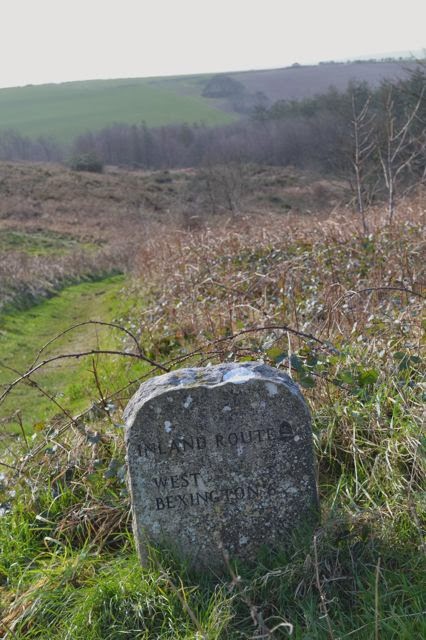
Not all the signs describe it as the South Dorset Ridgeway, some still describe it as the Inland Route of the Coastal Path, if that makes sense at all. There seems to be some debate amongst walkers on their forum whether this route is preferable to the purist's longer route by the sea that goes around Portland with opinion sharply divided.


I came to a three-way junction and became interested in the sign post that describes your options. It had mixed information. In one direction was the Bridleway and in the other two the SDR path, or so it seemed.


Yet the same post from the other side showed the SDR path taking the direction of the bridleway. The system of the circular markers and the wooden signs seemed to be at odds. I took my chances and followed my instincts setting off in the rough direction I could see on the map I had.


This led me around a bend until finally I could see in the distance The Hardy Monument ahead of me once again! I must have taken the wrong turn on that South Dorset Ridgeway junction with the bridleway I guessed.


I followed the path back towards the monument and was once again buffeted by the strong winds. When I got home later I read they were up to 70 mph in strength! This tree was up-ended by wind and so I had the idea to make some sound recordings of the wind since I will be making an audio tour and some sort of portrait of the location in sound might come in useful.


After this long diversion I returned to the original junction and studied at it once again. This bridleway really took me in the wrong direction it seemed to me so I again followed the path ahead between the trees hoping there might be some other clues that would set me on the right way.


Here I found a subtle junction with the main path (bridleway) taking the left and a small path heading off to the right. What exactly the orange circle is is quite beyond me, I didn't notice any UFO activity at the time and this just seemed to appear in the photos later so I'm going for optical effect in the camera. Anyway, I looked for signs but saw none and so explored the right hand path.


Following the path through a gate, around a small pond and then round a corner I discovered I was on the right path when I saw the next sign post. This is a rather laboured explanation, I know, but this is precisely the sort of thing that happens when you try following these paths: you stray from the route, you find your way back, you try again and then finally find your way. The reason I got lost was not the ambiguous three way sign back up towards Hardy Monument but because the UFO junction had not been marked and the main path was not the the actual path I was meant to follow.


Back on the SDR things were looking up again and I allowed myself to indulge in a little thought experiment. I had seen this route featured in the Channel 4 TV programme 'TIME TEAM' when they made a special feature on the South Dorset Ridgeway. One part of this had presenter Alex Langlands joined by an archeology professor from UCL who encouraged him to try an phenomenological approach to walking the landscape. That is to say, he was to follow the South Dorset Ridgeway for a couple of days and try to put himself into the head of an iron age man plodding the same track. He claimed that in spite of the Goretex and cameras he had some success in better understanding the 'ceremonial landscape' in this way. If it worked for him surely it could work for me! Well, I tried but kept on finding things such as this double style to interest myself in: the path continues on both sides of the fence, you are to pick the cow-free side.


There was then another hailstorm that I took shelter from, followed by a rainbow, and at the point where the SDR arrives at the road the cows were back in force and thick deep slurry too. The prospect of wading through that stuff again and to do with a herd of cows surrounding me, was not one I relished. Call me too modern, I retraced my steps and the stone age spell was well and truly broken. What did happen however is that I noticed the signage system of the route made more sense coming in this direction. There was not the same deeply ambiguous junction problem and this made me wonder if those making the route worked from West to East when putting the signs up. When a route has to function in both directions the person responsible for signage needs to be able to walk a route they have already signposted in the opposite direction as if they know nothing of the route. Either that or they get a colleague to walk it in the opposite direction and check it works equally well. It is actually not such an easy thing to do, particularly over a long distance when the work of laying out the signage is handled by different people who all have slightly different ways of indicating junctions. I remember following the number 1 cycle route though Kent some years ago and it was a complete mess with some sections crystal clear and some so opaque that they were more of a distraction than a help. SDR is not so bad but, like I showed, far from perfect.


This is the public art in the form of stones that can be sat upon and which invite the sitter to close their eyes and listen. I did so and heard a lot of wind. This reminded me of something I heard earlier about the South Dorset Ridgeway, that essentially 'they are trying to make it something that it isn't'. By which I took it to mean it is a pleasant walk through some interesting places if you know the history but it is not the new stonehenge just as The Jurassic Coast is not the Grand Canyon, even though they both hold UNESCO world heritage status. I see the hand of tourist development officers behind these efforts to rebrand the location and make it into a destination. The problem with this walking route is it is still going through too many working farms so it gets seriously gross underfoot in places and the signs aren't clear. Add to that the place is nice but it isn't exactly The Lake District or Scottish Highland and I see the point about trying to make it something that it isn't.


I cycled back down the hill in the face of the winds and ventured out again later to Abbotsbury to catch the sunset before heading to the local pub and doing some online research on further tours. Plenty more to investigate and another day of challenging weather.

Saturday, 8 February 2014

The South Dorset Mud Tour: a day to forget on the South Dorset Ridgeway

Today's travels began in Portsmouth at Fratton Station. My initial destination was Dorchester and my final destination Portesham or perhaps Littlebredy, I was never quite certain which.


The reason for this ambiguity was the simple fact that I was staying in Portesham but doing research for the performance and audio tour that I am making around Littlebredy for Inside Out Festival, which will take place in September.  


I had every expectation of arriving into a flood zone as I had spent the previous evening watched one depressing weather forecaster after another warning of dangerous storms in the South West. In the event, I had a soft arrival with dry, clear weather and enough time to pick up a map and one or two books in Dorchester before arriving in Portesham and settling in. I then set out and my first encounter was with an elderly gentleman whose job it was to direct traffic away from roadworks. He was an affable ex-forces chap with time on his hands and I heard about his property investments and the traffic directing business, which takes him around the country. I then set out for Littlebredy and found The Valley of The Stones.


I guess I wanted to encounter the area without too strong a tour to frame the experience in one way or another or to direct me to take any specific route. I was instead allowed to make my own way towards Littlebredy using the footpaths. From the place's name, the 'Valley of Stones' I thought it would be full of stone circles and megaliths of all varieties, but instead it is notable for just a few large rocks that dot their way along the bottom of the valley.


Approaching the village I remembered there was a path I had wanted to take on my previous visit but was unable to due to limited time. I marched up it as I thought it necessary to find ways to gain altitude, Littlebredy being in something of a hollow. This picture shows just how much up and down the walking is around here; the land is folded and can be unexpectedly steep. The route up here from Portesham that I took on my bike was particularly challenging.


Perspective is a funny thing. From a distance these silhouetted cows seemed almost heroic. 


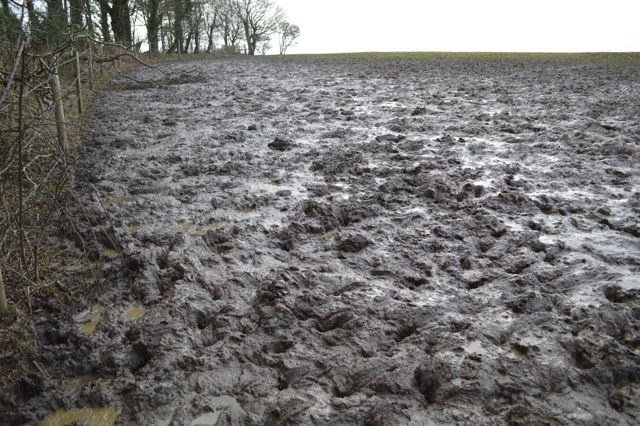
Up close, when I had to step into their field, however, it was quite another story. The mud  and shit came well above the line of my boots slipping down inside. The things I do for art... It was a similar story last time I was here walking around the South Dorset Ridgeway, we encountered a particularly grim patch, then, too. 


This is the style you cross to enter the South Dorset Ridgeway footpath. I was simply not going to make that step. I have my limits and tall wellington boots would be the only thing that would convince me that this was a good idea. There are, in fact, just a few too many places where the footpaths turn into slurry slides around here to make walking relaxing. When I return in the Summer it may be better but my guess is this is also an issue with the location of the paths as many run through dairy farms. 


Finally I saw what I was looking for, the notice about the change of name from the Inland Coast Path to the South Dorset Ridgeway. The bit I find amusing here is how it is described as "one of the UK's most important ceremonial landscapes." I think I will have to return to this idea of a ceremonial landscape.